Un-Making a Murderer: The Framing of Steven Avery and Brendan Dassey by Shaun Attwood
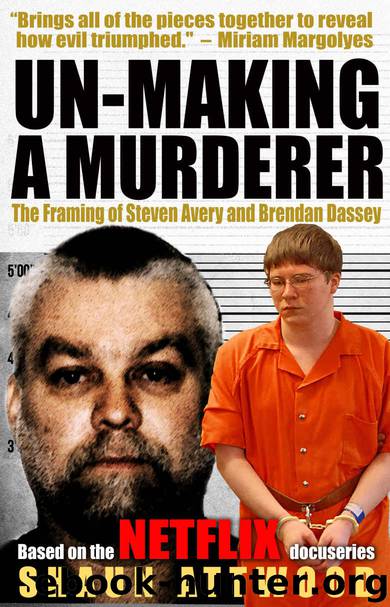
Author:Shaun Attwood [Attwood, Shaun]
Language: eng
Format: epub, azw3
Tags: Non-Fiction
Publisher: Gadfly Press
Published: 2017-01-22T00:00:00+00:00
Strategy 6: Ensure Public Defenders Work for the Prosecution
Public defenders are assigned to people who cannot afford a lawyer. The state pays them a fraction of the prosecutor’s budget to ensure that their performance in the courtroom is substandard – which guarantees the prosecution’s monopoly on putting on the best show in town and achieving endless guilty verdicts. Even well-intentioned public defenders cannot compete against the state’s ability to lavish taxpayers’ money on actors such as expert witnesses. Wisconsin is renowned for its stinginess in paying public defenders.
Public defenders operating on a shoestring budget want to do as little work as possible. They avoid going to trial because of the extra effort involved. Even when defendants insist on going to trial, public defenders will try to talk them out of it. That’s why over 90% of state and federal cases conclude as plea bargains. Defendants who go to trial and lose receive aggravated sentences as a deterrent to others foolish enough to want to exercise their constitutional right to a trial. Trials cost the state money, and the justice system is a business model.
A plea-bargain is a deal brokered between the defence and the prosecution. Reduced sentences are offered to those willing to acknowledge their guilt without going to trial. Negotiating plea-bargains, prosecutors employ the tactics of used car sales people. In my Ecstasy trafficking case, I had over twenty charges. I was told that each charge carried anywhere from 5 to 10 years. If I didn’t sign a plea-bargain, and I lost at trial, the judge would give me the aggravated sentence – 10 years – on twenty charges, which I would have to serve consecutively, so I was facing a maximum sentence of 10 years x 20 charges = 200 years. With the help of a private lawyer who cost almost $100,000, I fought my case for 26 months. Over time, I got my plea bargain down to 9½ years. If I had been assigned a public defender instead of hiring a private lawyer, I’d probably still be in prison.
The worst kind of public defenders work against the interests of their clients, and for the benefit of their paymaster: the state. They want their clients to sign plea bargains admitting guilt, so that they can move on to the next clients/victims. Prisoners call these lawyers “public pretenders.”
I was guilty as charged, but several of my co-defendants, who had allegedly worked for me, had never even met me. They had been falsely accused. When they told their public defenders this fact, they were instructed to plead guilty and to sign an exhibit that stated that they knew me and had worked for me. If they refused, they would get much bigger sentences.
Brendan Dassey was assigned the worst kind of public defender. Len Kachinsky wasn’t the slightest bit interested in proving Brendan’s innocence. He wanted Brendan to immediately sign a plea bargain admitting guilt and implicating Steven Avery, so that he could move on to his next client/victim, which would keep the money flowing to him.
Download
Un-Making a Murderer: The Framing of Steven Avery and Brendan Dassey by Shaun Attwood.azw3
This site does not store any files on its server. We only index and link to content provided by other sites. Please contact the content providers to delete copyright contents if any and email us, we'll remove relevant links or contents immediately.
| Anthropology | Archaeology |
| Philosophy | Politics & Government |
| Social Sciences | Sociology |
| Women's Studies |
Cecilia; Or, Memoirs of an Heiress — Volume 1 by Fanny Burney(32527)
Cecilia; Or, Memoirs of an Heiress — Volume 2 by Fanny Burney(31928)
Cecilia; Or, Memoirs of an Heiress — Volume 3 by Fanny Burney(31916)
The Great Music City by Andrea Baker(31902)
We're Going to Need More Wine by Gabrielle Union(19020)
All the Missing Girls by Megan Miranda(15892)
Pimp by Iceberg Slim(14464)
Bombshells: Glamour Girls of a Lifetime by Sullivan Steve(14038)
For the Love of Europe by Rick Steves(13822)
Talking to Strangers by Malcolm Gladwell(13332)
Norse Mythology by Gaiman Neil(13317)
Fifty Shades Freed by E L James(13216)
Mindhunter: Inside the FBI's Elite Serial Crime Unit by John E. Douglas & Mark Olshaker(9298)
Crazy Rich Asians by Kevin Kwan(9262)
The Lost Art of Listening by Michael P. Nichols(7478)
Enlightenment Now: The Case for Reason, Science, Humanism, and Progress by Steven Pinker(7288)
The Four Agreements by Don Miguel Ruiz(6729)
Bad Blood by John Carreyrou(6601)
Weapons of Math Destruction by Cathy O'Neil(6248)
